A 39% Tariff Shock on Swiss Watches Shakes the Watchmaking Industry
The United States imposes a 39% tariff on Swiss watches. A major upheaval for the Swiss industry, caught between squeezed margins and diplomatic tensions.
A Brutal Trade War Context
The news came as a bombshell in the middle of summer 2025: starting August 7, the United States will apply a 39% tariff on all imports from Switzerland, including watches. This exorbitant rate, one of the highest in the world, far exceeds the 15% tariff granted to European neighbors after an agreement, and even the 31% initially brandished by Washington in April. This decision is part of President Donald Trump's trade “rebalancing” strategy, obsessed with American deficits. In the absence of a bilateral agreement before the August 1 deadline, Switzerland finds itself penalized with a record surtax, even though it had negotiated a draft agreement and expected a much more modest rate of around 10%. The White House justifies this power move by Bern's refusal to offer “significant” concessions on access to its market, judging the current relationship too unbalanced in favor of the Swiss. Bern retorts that 99.3% of American goods already enter Switzerland duty-free and says it is dismayed to see Washington ignore the progress of the talks. The Swiss government noted “with great regret” tariffs deemed unilateral and “of a considerable amount,” while reaffirming its commitment to continuing the path of dialogue.
The Leading Market Threatened for Swiss Watchmaking
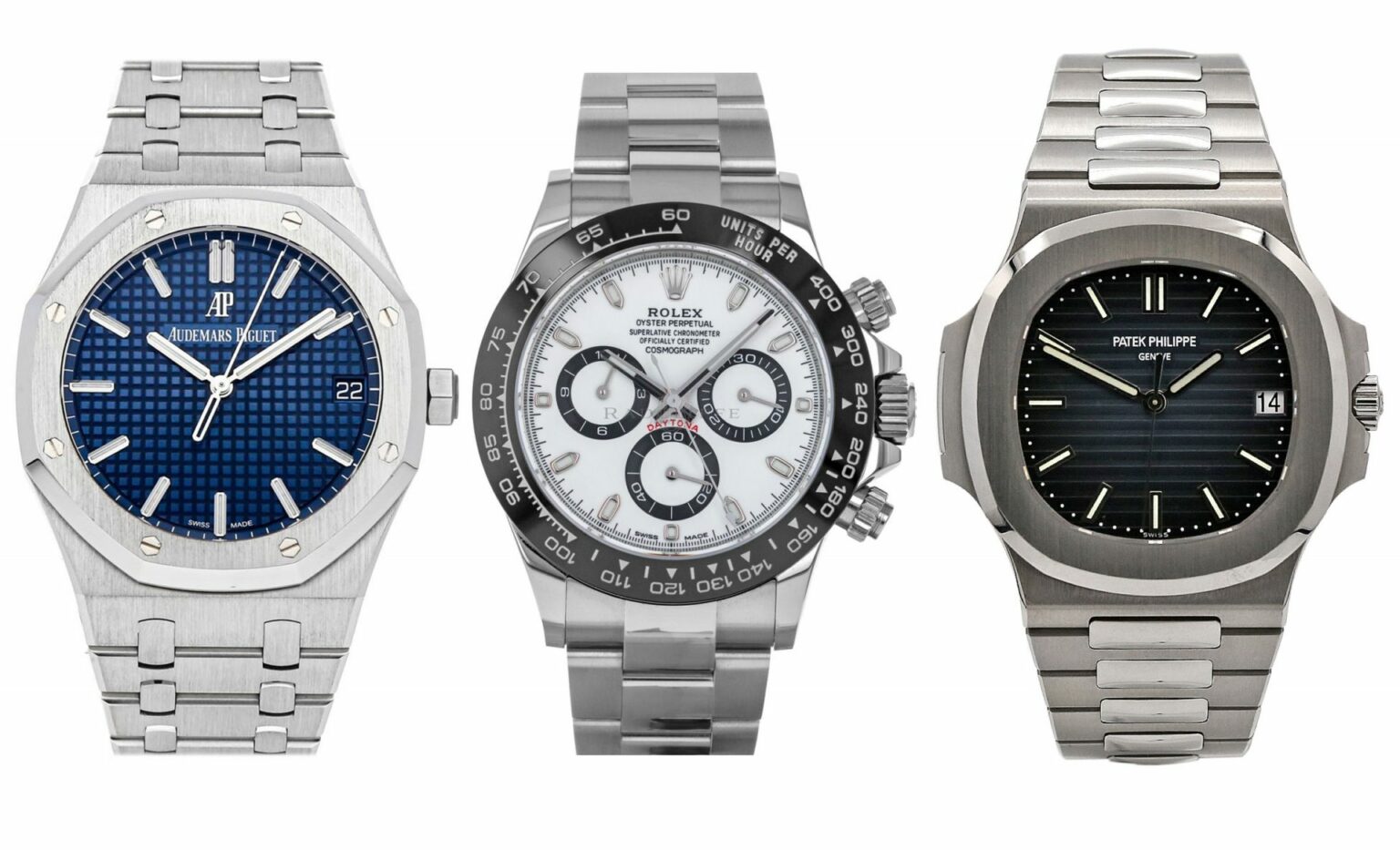
Swiss watches, emblems of Swiss luxury, find themselves on the front line of this trade war. The United States is the world's leading market for Swiss watchmaking, accounting for 16.8% of exports in 2024 (around 4.4 billion francs). In recent years, strong American demand had supported the sector against the slowdown in China, with sales to the US up by 5% in 2024, compared to a 25% drop to China. The introduction of a punitive 39% tariff therefore feels like an earthquake for the industry. “The United States is currently our primary market. Such a tax level would be brutal. At 10% we could manage, but 39% is prohibitive, it would mean excluding a large part of the Swiss industry from the US market. I hope the last word has not been said and that a solution will be found,” warns Rolf Studer, co-CEO of the independent manufacture Oris. The same sentiment is shared by the umbrella organization Swissmem, which represents the machine tool and microtechnology industries: “This is a massive shock for exports... these tariffs are devoid of rational basis and totally arbitrary,” denounces its deputy director Jean-Philippe Kohl. Manufacturers warn that tens of thousands of jobs are at stake in a sector employing 60,000 people in Switzerland, not to mention the staff of retailers and subsidiaries on American soil.
Margins Under Pressure and Inevitable Price Increases
Faced with this surtax, Swiss watch brands will have no choice but to review their prices or their margins. Some had already anticipated the first tariff salvo in the spring (a provisional 10% duty) by discreetly raising their retail prices in the United States. Groups like Rolex, Richemont (Cartier, Vacheron Constantin, etc.) or Swatch Group (Omega, Tissot, etc.) have thus applied increases of around 3% to 5% in recent months. But the 39% mark is of a completely different order of magnitude. According to calculations by consultant Oliver Müller (LuxeConsult), a 39% import tax on a Swiss watch would concretely translate into an increase of about 12% to 14% in the final retail price for the American consumer. This would mean, for example, that a Tissot PRX at $775 would see its price climb to nearly $870 (+$95), while a Rolex Submariner would go from around $9,500 to $10,600 (+$1,100). For the brands, absorbing the shock entirely on their margins seems unsustainable, but passing it on fully to customers would run the risk of drastically slowing sales. Financial analysts expect painful trade-offs. UBS estimates that a lasting 39% tariff could slash the operating profit of Swatch Group, which is highly exposed to mid-range watches, by about 40%, and that of luxury giant Richemont by a “mid single-digit” percentage. Barclays bank warns that even the most sought-after haute horlogerie brands, such as Rolex or Patek Philippe, which voluntarily limit their production to sustain demand, are not immune to such a tax level. Admittedly, these brands with saturated order books will be able to increase their prices with a moderate impact on sales volumes. “Our most affluent customers, many of whom wait years on waiting lists to obtain certain models, will be able to withstand price increases,” confirms Brian Duffy, CEO of retailer Watches of Switzerland, a major dealer of Rolex and Patek. He says he was struck by the “shock” of this announcement, but believes his company is “better positioned than others, because demand still exceeds supply.” On the other hand, less exclusive mid-range brands, those whose supply is not structurally lower than demand, struggle to envision substantial price increases without losing sales volume. “Brands not protected by limited supply risk seeing their sales drop if they pass on too much of the extra cost, especially in a gloomy macroeconomic context,” warn Barclays analysts.
Emergency Strategies: Stocking, Shipping, and Adapting
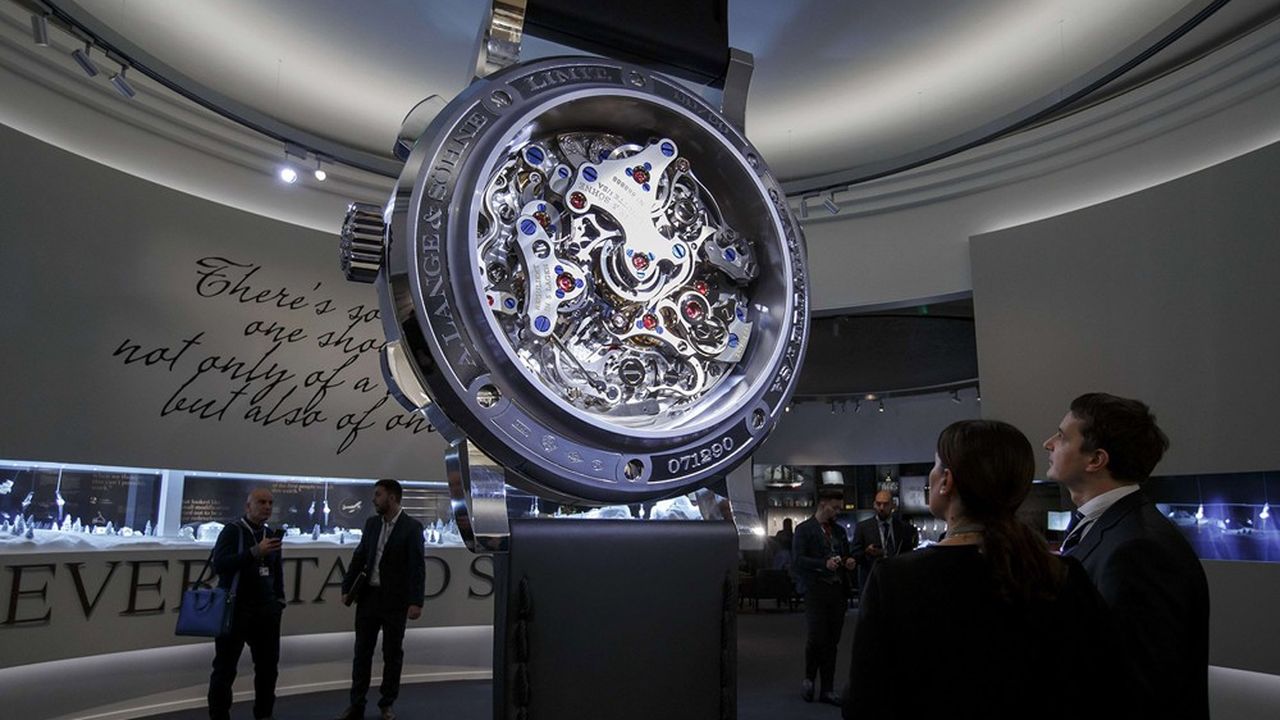
With the countdown to August 7 underway, the focus is on all-out anticipatory measures. Several retailers and watchmakers are seeking to ship as many watches as possible before the prohibitive tariff takes effect. “We will try to bring forward some deliveries and import stock earlier than planned to beat the tax,” confirms Brian Duffy, while acknowledging he is limited by the volumes available in the short term. This race against time had already begun in the spring: in April, when the first tariff threats were announced, American retailers heavily stocked up on Swiss timepieces, boosting exports to the United States by 149% year-on-year; then in May, once stocks were built up, shipments fell back by 25%. Statistics from the Federation of the Swiss Watch Industry thus reveal highly volatile flows in recent months. Over the first five months of 2025, the industry's overall export turnover showed only a timid 1.1% increase, a misleading growth due almost exclusively to North America, warns the Federation, which notes that “the trend in real sales is less positive” than it appears. “The United States accounted for 21% of Swiss watch exports since the beginning of the year, an all-time record, while mainland China is in sharp decline,” observes analyst Jean-Philippe Bertschy from Vontobel. This shows how much the prospect of a forced slowdown in the US market worries Swiss manufacturers, who are already facing a strong Swiss franc and soaring raw material costs, led by gold. Downstream, American distributors and collectors are also organizing. “As a collector, I will defer delivery of all my watches scheduled for 2025 as long as the situation does not evolve,” says Eric Ku, founder of the watch auction platform Loupe This. His company is even considering suspending consignments of watches coming from outside the United States, or opening a branch in Asia to continue trading sheltered from customs duties. More and more American customers could choose to buy their timepieces abroad or on the gray market to avoid the surtax. Experts thus anticipate a boom in the domestic secondary market: “This tariff effectively creates two parallel markets for Swiss watches: an American market where prices skyrocket, and a market for the rest of the world where customers pay normal rates,” analyzes an industry columnist. Pre-owned models already on US soil, escaping customs duties, would become particularly sought after, “a new asset class” for savvy collectors. According to EveryWatch, a company specializing in resale data, the volume of pre-owned watch transactions climbed by more than 30% in the first half of 2025, a trend set to amplify if new watches become less accessible. “After a slowdown in April linked to tariff announcements, the US pre-owned watch market rebounded strongly in June-July, driving global growth in the sector. With a 39% duty, the primary market will suffer while the secondary market, especially vintage, will gain even more strength,” observes Giovanni Prigigallo, co-founder of EveryWatch. According to him, if these taxes persist, the “certified pre-owned” program (the certified pre-owned watch program launched by Rolex and others) could “develop at high speed, to the point where the pre-owned market could surpass the new market sooner than expected.” Ultimately, everything will depend on “the brands' decisions: to increase prices or cut margins,” concludes the analyst.
Bern in Search of a Diplomatic Way Out

On the diplomatic front, this trade confrontation is putting Switzerland's conciliatory neutrality to the test. The Swiss Federal Council (government) is multiplying last-ditch efforts to soften the blow. The President of the Confederation, Karin Keller-Sutter, tried until the very end to convince Donald Trump during a phone call on August 1, but “no agreement” could be reached before the deadline. According to her, the US President remained focused on the US trade deficit with Switzerland, which reaches around $38.5 billion on goods, a figure that is nevertheless significantly reduced when taking into account the large US surpluses in services (technology, finance, etc.) and the gold flows transiting through Switzerland. Since the announcement of the 39% tariff, Bern has expressed its “deep disappointment” and is banking on dialogue: “despite the progress of the discussions and Switzerland's very constructive attitude, the United States wants to apply additional tariffs of a considerable magnitude... We will remain in contact with the US administration to find a solution compatible with our legal order and our international commitments,” a federal spokesperson declared. Concretely, the government is analyzing measures to support exporting companies hit by the tax. The use of partial unemployment insurance is being considered to preserve threatened industrial jobs, the Department of Finance indicated. In parallel, the possibility of Swiss counter-measures divides the political class: most parties judge these tariffs “massive and unjustified” but rule out a hasty response, with some calling instead to accelerate the conclusion of a free trade agreement with Washington to resolve the crisis. For now, Switzerland is ruling out any escalation and favoring negotiated solutions. “As a general rule, the last word is never completely said,” recalled Keller-Sutter, remaining optimistic about a future compromise. The new effective date of August 7, postponed by a week by the Trump administration to allow customs time to prepare, is now imminent. Past this deadline, without a last-minute “deal,” a new paradigm awaits Swiss watchmaking on American soil. Many observers believe that this shock tariff remains a negotiating tactic: “Our central scenario is that Switzerland will eventually secure an agreement similar to the EU, meaning a tariff reduced to 15%,” they estimate at UBS. In the meantime, the Swiss industry is holding its breath. Never, since the “Quartz” crisis of the 1970s, have both haute horlogerie and more accessible segments had to face a challenge of such magnitude in their main market. The coming months will tell whether this tariff warning shot was just another fleeting standoff or the beginning of a profound reshaping of transatlantic watch trade.