Twenty-Five Years On, Roger W. Smith Finally Unveils His Production Tourbillon
To mark his brand's 25th anniversary, Roger W. Smith unveils the Series Seven: a co-axial tourbillon with an annual calendar, paying tribute to George Daniels, produced at just one or two pieces per year.
It has taken twenty-five years. To mark his brand's anniversary, Roger W. Smith unveiled the Series Seven during a dinner for his clients at the Victoria and Albert Museum in London. This is the first production tourbillon from the Isle of Man watchmaker, following just four unique pieces made to order, and it is also, according to SJX, the most complicated model ever to leave his workshop. A new release from Roger Smith is always an event: the workshop produces only fifteen to twenty watches a year, and waiting lists are approaching a decade.
To understand why this watch is so significant, we have to go back to 1997. That year, George Daniels, the inventor of the co-axial escapement now found in Omega watches, rejected the first pocket watch presented to him by the young Smith. Undeterred, Smith went back to work and returned with a second piece, the Pocket Watch No. 2, equipped with a tourbillon and a perpetual calendar. This time, the master approved. Smith joined his workshop in 1998, then worked alongside him on the Millennium watches, of which 56 pieces were eventually delivered until 2001. The Series Seven is built upon these two memories.
A Tribute, Not a Copy
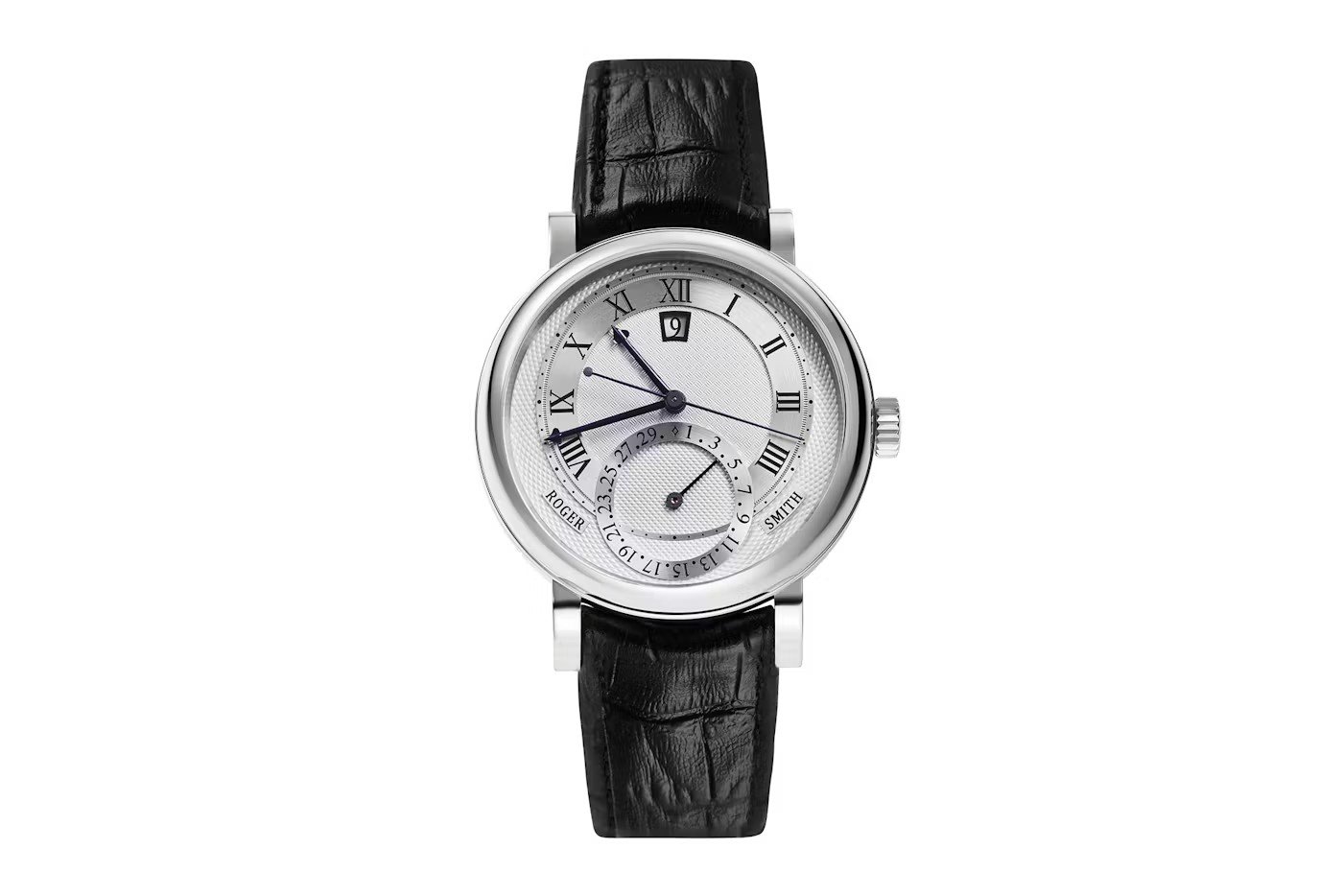
The dial adopts the off-centre layout of the Millennium: a hand-guilloché silver dial, three hand-engraved patterns, applied chapter rings, and thick, blued hands with deliberate, charming irregularities. In a major first for Smith, this is his first watch with a central seconds hand. The case measures 40 mm in diameter and 14.6 mm in thickness, available in red gold or platinum, complete with a London hallmark and a sapphire caseback.
It is through this caseback that the tourbillon is revealed. Smith chose not to expose it on the dial side: the one-minute cage, entirely black-polished to remain discreet, is only visible by turning the watch over. The entirely new Calibre S7 beats at 3 Hz, offers a 48-hour power reserve, and uses double barrels to deliver a more constant force. Its architecture is directly inspired by the Pocket Watch No. 2, and it is the thinnest tourbillon movement Smith has ever designed. As detailed by Revolution, the co-axial escapement components are sourced from an Omega watch, as they are too small to be manufactured in his workshop. Daniels and Smith had previously used this same approach for the Millennium.
When it comes to finishing, the watchmaker deliberately turns his back on Swiss codes: there is no mirror-polished beveling, perlage, or Côtes de Genève, but rather frosted and gilded plates, screwed gold chatons, and floral engravings on the barrel cover. Then, there is the complication that surprised everyone.
An Annual Calendar Conceived as a Perpetual
A small window below 12 o'clock displays the month, while a hand at 6 o'clock indicates the date. This is Roger Smith's first annual calendar, but it is constructed like a perpetual calendar, lacking only the leap year adjustment. Consequently, it only needs to be corrected once a year, at the end of February. SJX notes that adding a Maltese cross to the twelve-month cam would be enough to make it perpetual, hinting at a future evolution. Smith also made a clear choice: the date change is not instantaneous, as he prioritised reliability.
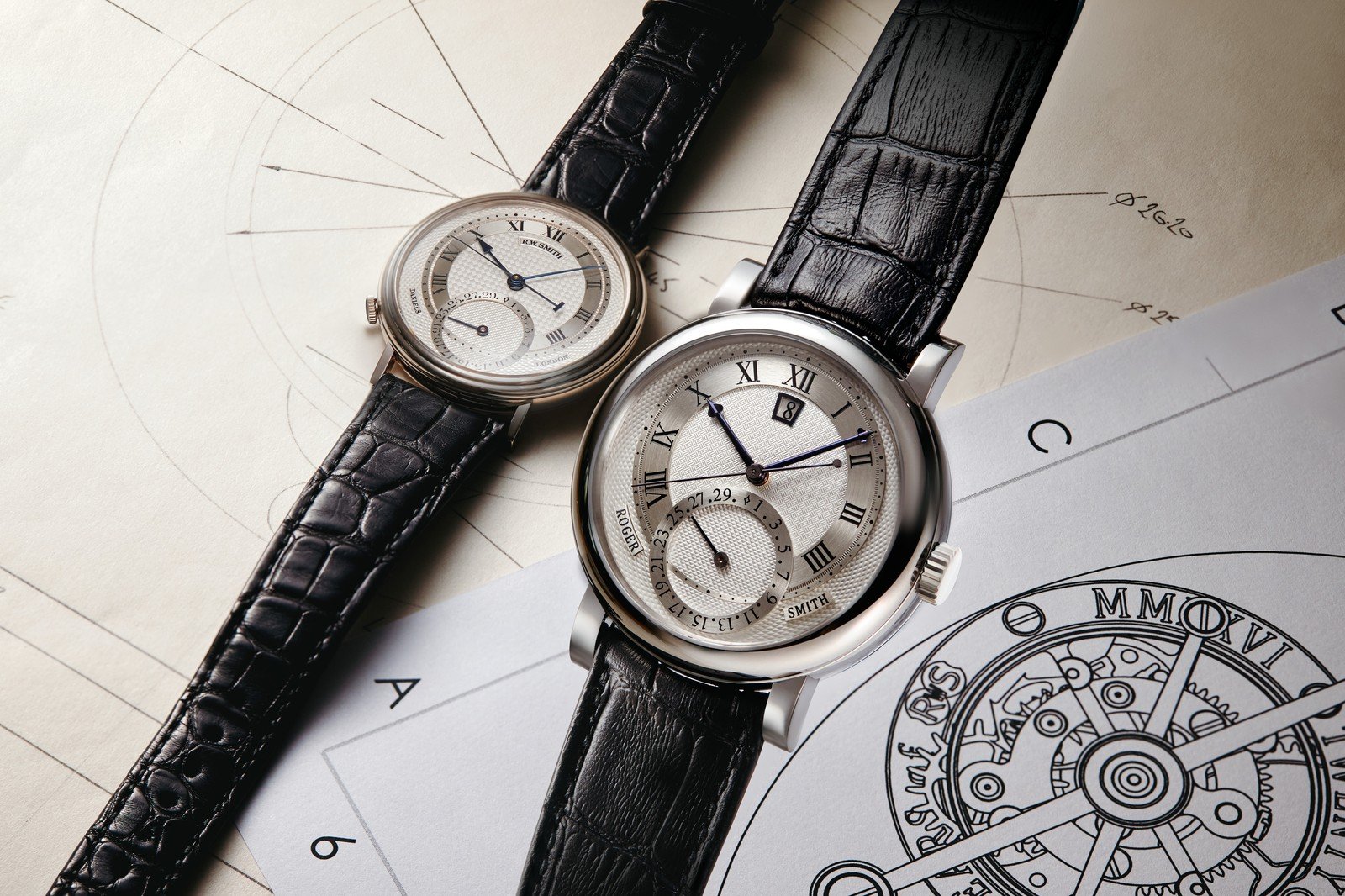
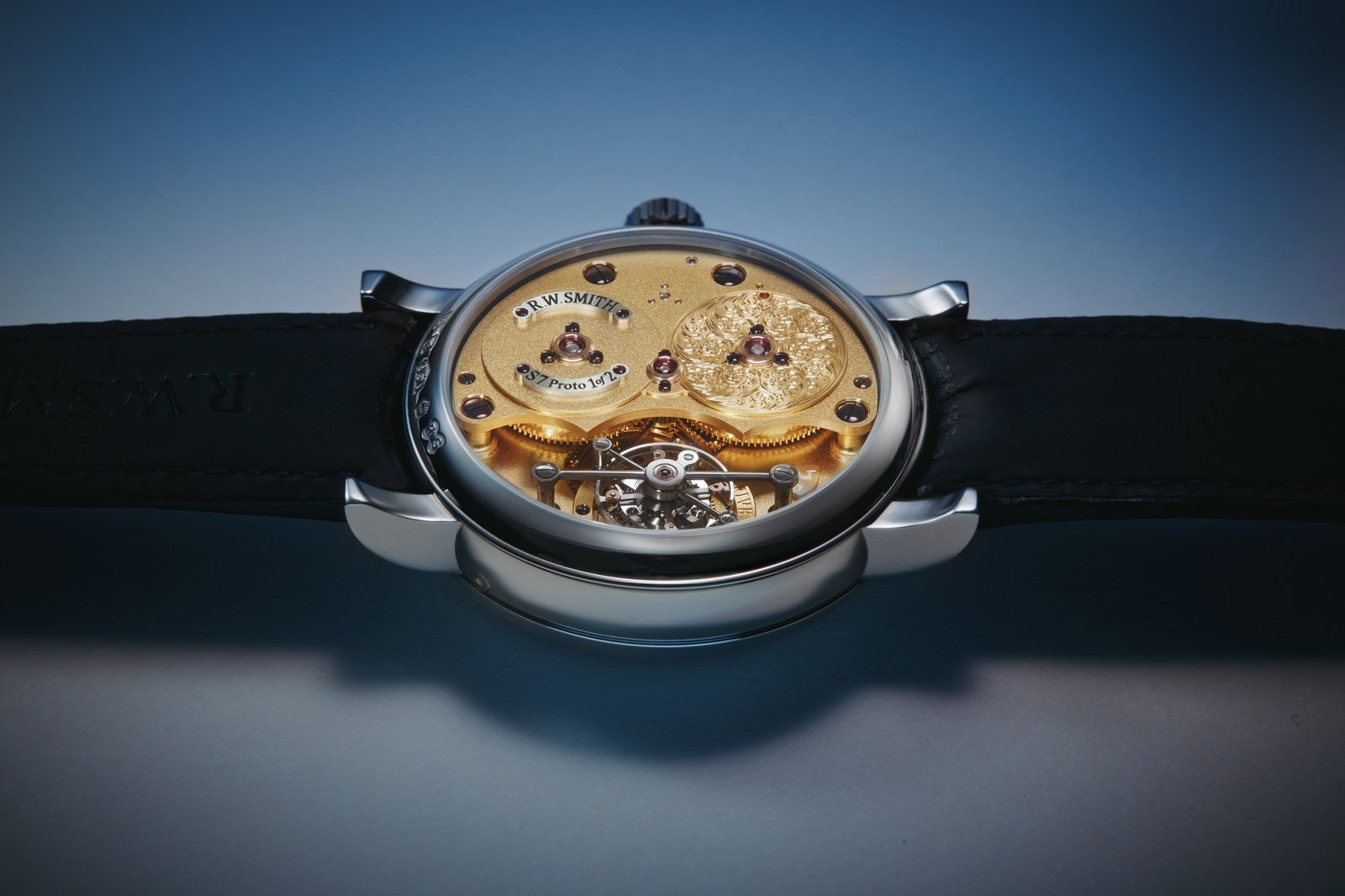
The platinum prototype features the engraving “MMXXVI Twenty Five Years of RWS” on its center wheel bridge. Two prototypes exist, one in platinum and the other in red gold. And this is where the Series Seven becomes a fascinating market talking point.
One or Two Watches a Year, and an Unknown Price Tag
Roger Smith plans to produce about one or two pieces per year. While not officially a limited edition, the result is effectively the same. The price has not yet been set and will be discussed on a case-by-case basis, although SJX mentions an unconfirmed rumor of a seven-figure price tag.

To gauge the watchmaker's market standing, one figure says it all: in December 2023, the Pocket Watch No. 2, the very piece that convinced Daniels, sold for $4.9 million at Phillips in New York, against an initial estimate of over $1 million. The Series Seven is its direct heir, in a wristwatch format. With such highly confidential production, the rare examples that eventually change hands are expected to reach sums comparable to the greatest independent watchmakers. A watch like this will never enter our indexes: there simply will not be enough transactions to establish a market value. But for those tracking the robust health of independent watchmaking, this is one of the strongest signals of the year.