Steve McQueen’s Heuer Monaco: The Lost Icon of Cinema and Watchmaking
<img width="1920" height="1080" src="https://ostermanwatch.com/wp-content/uploads/2025/03/16x9forHSite16.avif" alt="" srcset="https://ostermanwatch.co
[FRENCH] VERSION
[ENGLISH] VERSION
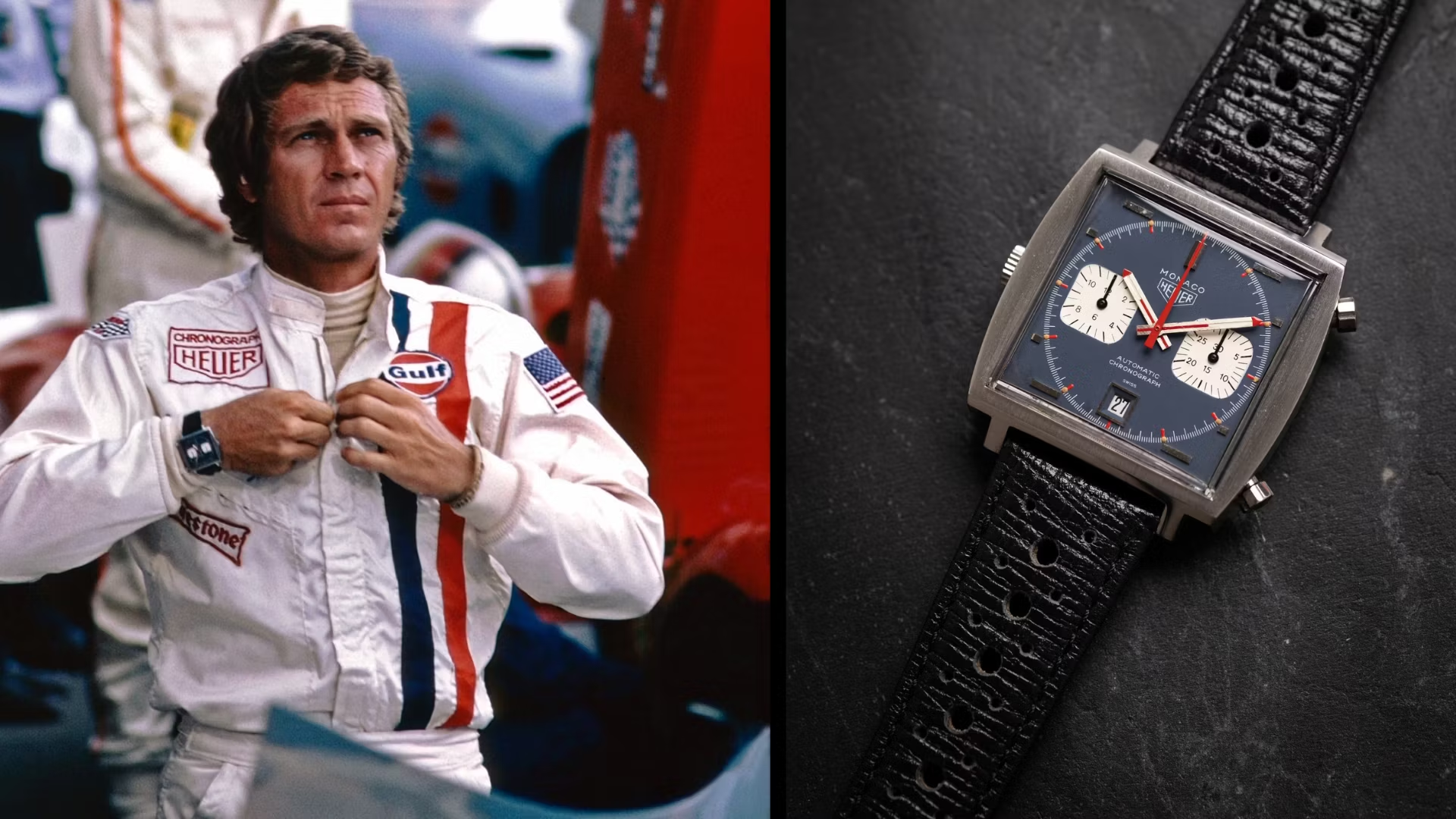
Steve McQueen embodies raw elegance, indomitable charisma, and the myth of the rebel gentleman. Few actors have left such an intense mark on their era, and few objects have become as iconic as the watch that accompanied him in his most legendary film. The TAG Heuer Monaco, worn on McQueen's wrist in Le Mans in 1971, is far more than a simple accessory. It is the silent witness to an era when motorsport was an arena of modern gladiators, where danger and speed were daily companions. Yet, what few realize is that several examples of this watch were used during filming. Some have resurfaced commanding astronomical prices. Others have vanished into a mysterious haze, fueling the legends of the watchmaking world.
When the film Le Mans went into production in 1970, Steve McQueen was already a style icon. Obsessed with authenticity, he demanded that every detail of the shoot reflect the reality of motor racing. He wanted everything, from the roar of the engines to the speck of dust on the racing suits, so
that every viewer could feel the adrenaline that makes a driver's heart beat at 300 km/h. In his quest for realism, he consulted Jo Siffert, the Swiss Formula 1 driver and Heuer brand ambassador, to choose a watch that would embody this spirit. The choice fell on the Heuer Monaco, a revolutionary chronograph at the time. It was the first square automatic chronograph and the first to be truly water-resistant in this shape. It shattered conventions with its bright blue dial and angular case, a complete departure from more traditional round designs.
During filming, six examples of the Heuer Monaco were made available. These watches were not solely intended for McQueen;

they were also used for close-ups, action scenes, and technical production adjustments. Among them, four were fitted with a leather strap, identical to the one the actor wore throughout the film. At the time, no one suspected that these timepieces would become some of the most sought-after watches in history
Once filming wrapped, the Heuer Monacos went their separate ways. McQueen, a man of style and generosity, gifted one of them to his personal mechanic, Haig Alltounian. It was a gesture filled with respect, as without him, none of the scenes would have been possible. The watch was engraved with a simple yet highly symbolic phrase: “To Haig Le Mans 1970”. For decades, it remained in the hands of its original owner, until it resurfaced in 2020 at an auction where it sold for $2.2 million, shattering all estimates. It was then that interest in the other examples of the watch took on a whole new dimension


Two other models were acquired by TAG Heuer, which understood the historical importance of the Monaco. These pieces became treasures of the brand's museum, and their authenticity has been verified multiple times by watchmaking experts and film historians. But the hunt continues. Pieces of the puzzle are still missing
Another Heuer Monaco resurfaced in 2009. After decades in a private collection, it was offered at auction and reached $87,600, a still modest sum compared to the value it would command in the following years. Three years later, another version sold for $799,500, confirming the growing appeal of these models among the most demanding collectors.
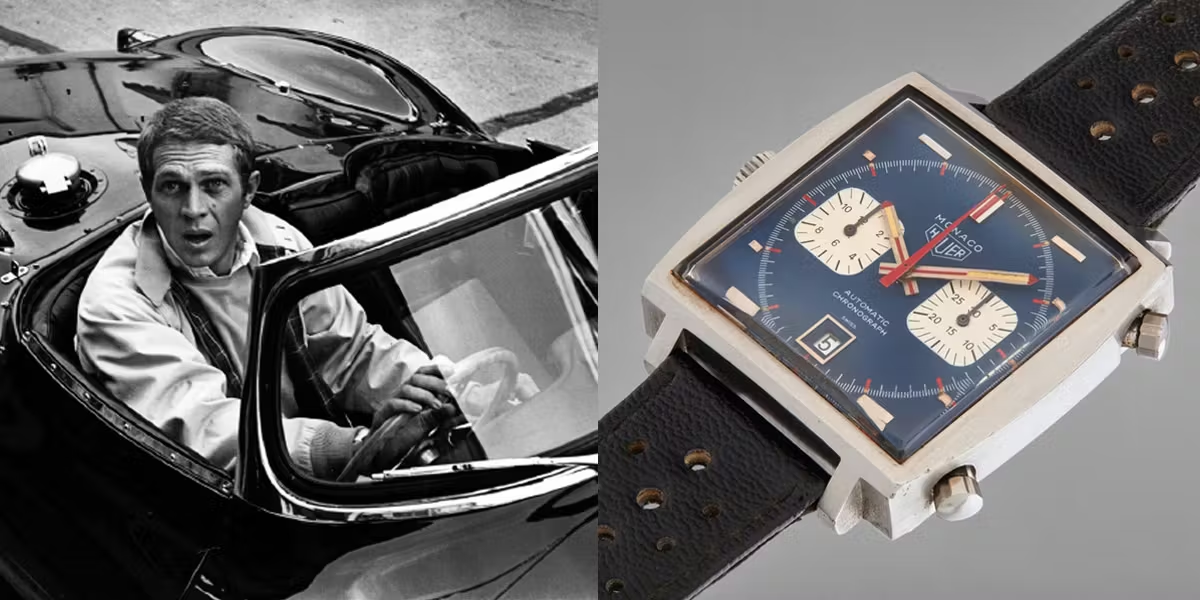
Then came December 2024. Sotheby’s put another Heuer Monaco owned by McQueen up for sale. Excitement was at its peak. Its estimate ranged between $500,000 and $1,000,000, but demand was so high that it shattered expectations, selling for $1.4 million. A sum that testifies to the cult status of this watch, which is no longer just a horological accessory, but a fragment of cinema and motorsport history
But then, where did the other two Heuer Monacos from the shoot go? While three of them have found their way back into the spotlight, the last two seem to have vanished. Some believe that one of them disappeared with the film equipment, forgotten in a prop inventory or sold without anyone realizing its true value. Others put forward a more romantic theory: McQueen himself might have kept one, away from prying eyes, as a personal keepsake of this demanding and chaotic shoot

Don Nunley, the film's property master, confirmed that McQueen was particularly fond of the watch and could have taken one for himself without declaring it. This would mean that a final model, actually worn by McQueen, could still be hidden in a private collection. Imagine: an original Heuer Monaco, truly owned by the man who made it legendary, sitting in a safe, waiting for the day someone reveals its existence to the world
This mystery only adds to the mythical aura of the TAG Heuer Monaco. It is not just a watch. It is a witness to the style and audacity of an era, a piece of history that continues to thrill collectors. Perhaps one day, Steve McQueen's final Heuer Monaco will resurface, sparking a frenzy comparable to the discovery of a hidden treasure. Until then, it remains one of the greatest fantasies of vintage watchmaking—a myth that, far from being resolved, only continues to grow.
If you enjoyed this article, you can also discover “The 1953 Everest Ascent and the Birth of the Rolex Explorer”