Swiss Watch Exports: A 149% Surge to the US, but at What Cost?
<img width="1536" height="1024" src="https://ostermanwatch.com/wp-content/uploads/2025/06/ChatGPT-Image-9-juin-2025-22_37_23.png" alt="" srcset="https
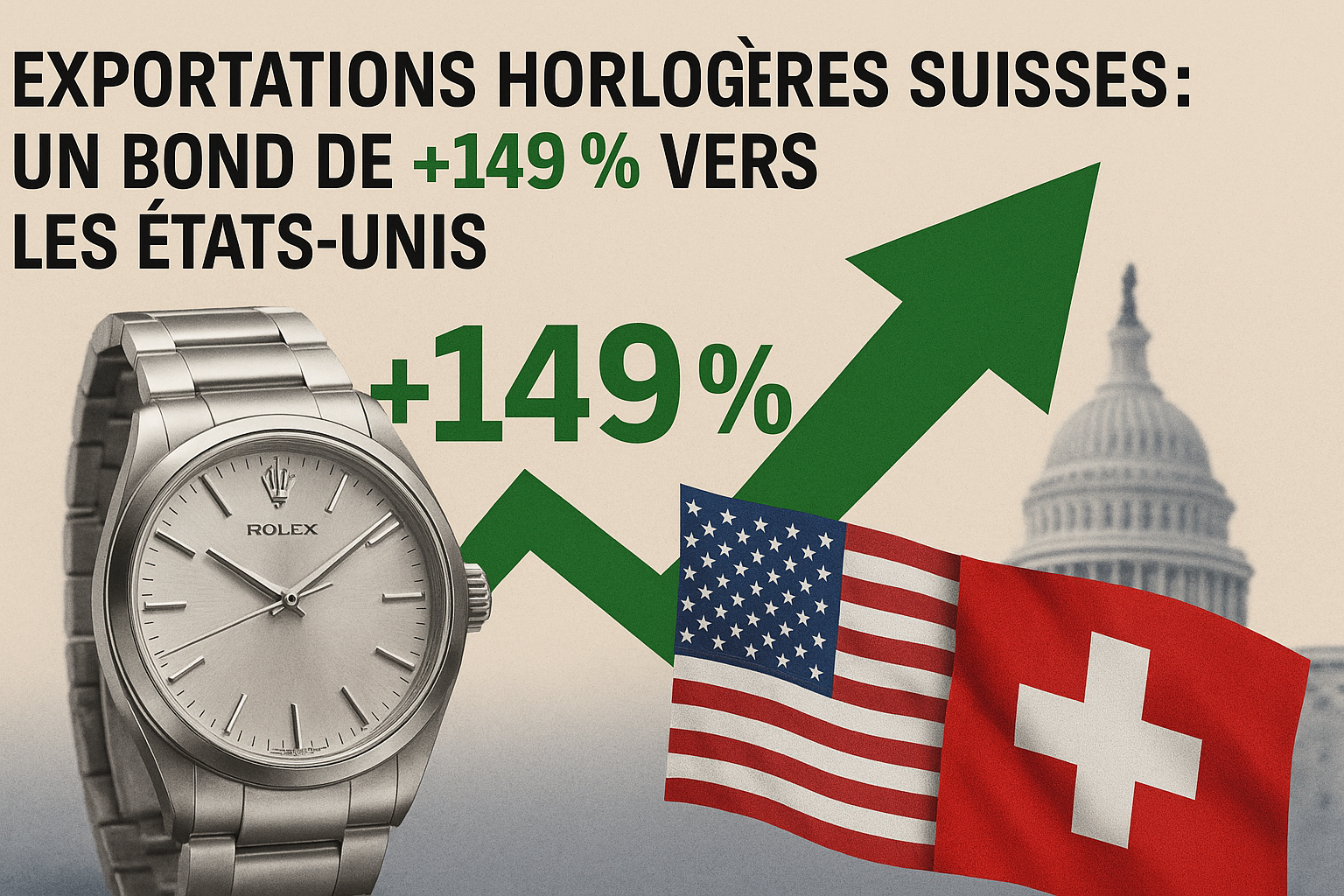
In April 2025, the Swiss watch industry recorded an exceptional performance: a 149.2% surge in exports to the United States. This spectacular figure largely helped mask the general weakness of the Asian market during this period. But behind this historic growth spike lies a context that is far more strategic than commercial. Here is our analysis.
According to figures published by the Federation of the Swiss Watch Industry (FH), total exports for April 2025 reached CHF 2.5 billion, up 18.2% compared to April 2024. However, this increase was actually driven almost exclusively by the American market. On its own, the US market absorbed CHF 852 million worth of Swiss watches that month, an unprecedented figure. Without the US contribution, April would have recorded a global decline of 6.4%. In other words, without this exceptional boom to the United States, Swiss watchmaking would have posted a clear decline, in line with the downward trend observed in China (-30.5%) and Hong Kong (-31.3%).
This surge is by no means a miracle of demand. It is primarily explained by an anticipatory strategy from Swiss exporters in the face of a tariff threat issued by Donald Trump. In April, the Republican candidate announced his intention to impose new tariffs of up to 31% on Swiss watches as part of a potential trade war should he return to the White House.
Faced with this prospect, watch brands and their distributors heavily front-loaded their shipments to the United States to avoid these extra costs. The result was an import logistics bottleneck, temporary saturation of the US market, and an artificially inflated month of April. This preventive export strategy is not without consequences. By concentrating several months of inventory in April, brands risk a mechanical slump in the following months, particularly in May and June. The FH itself stressed that these figures should not be interpreted as a structural recovery of the US market, but rather as a statistical anomaly caused by a specific geopolitical event. Furthermore, if the new taxes were indeed to come into effect in July or at the end of the 90-day moratorium, future sales could be heavily penalized in terms of both margins and volumes.
This situation illustrates a strategic reality: the Swiss watch industry's growing dependence on the US market. Already in 2023, the United States had dethroned China as the leading export market, a trend that was further reinforced in 2024. However, this dependence exposes the sector to significant risks, particularly political ones. In the future, Swiss brands will need to rethink their geographical diversification while strengthening their resilience to the protectionist policies of certain powers. The April 2025 episode could well serve as a catalyst for a strategic reorientation of Swiss watchmaking.
The spectacular 149% surge to the United States in April is a fact. It is historic, remarkable, but temporary. This is not a boom in demand; it is a defensive reaction. A record month, yes, but one that hides the fragility of a system exposed to political upheavals. The Swiss watch industry would be well-advised not to rest on its laurels.
Request Private Access to Osterman Index
The new face of Osterman Watch is coming.
We are transforming Osterman Watch into a comprehensive watch market analysis platform.
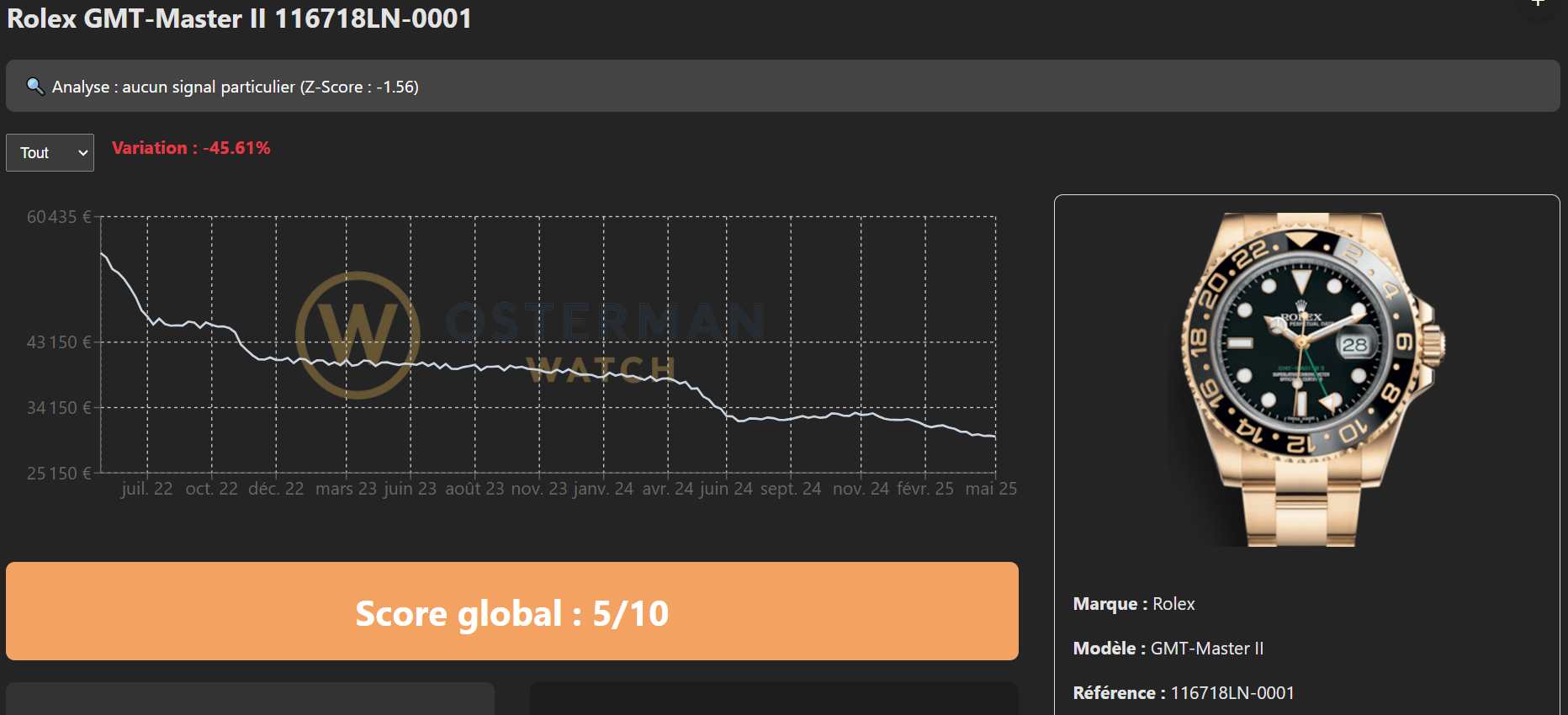
With the Osterman Index, track real price developments on the secondary market, discover exclusive indices, measure the liquidity, growth, and popularity of the most sought-after watches, and build your personal portfolio of timepieces.
Designed for collectors, investors, and industry professionals,
the Osterman Index gives you the concrete tools to anticipate, compare, and decide.