Swiss Watchmaking: A Mid-2025 Economic Report
<!-- wp:heading --> <h2></h2> <!-- /wp:heading --> <img width="1024" height="638" src="https://ostermanwatch.com/wp-content/uploads/2
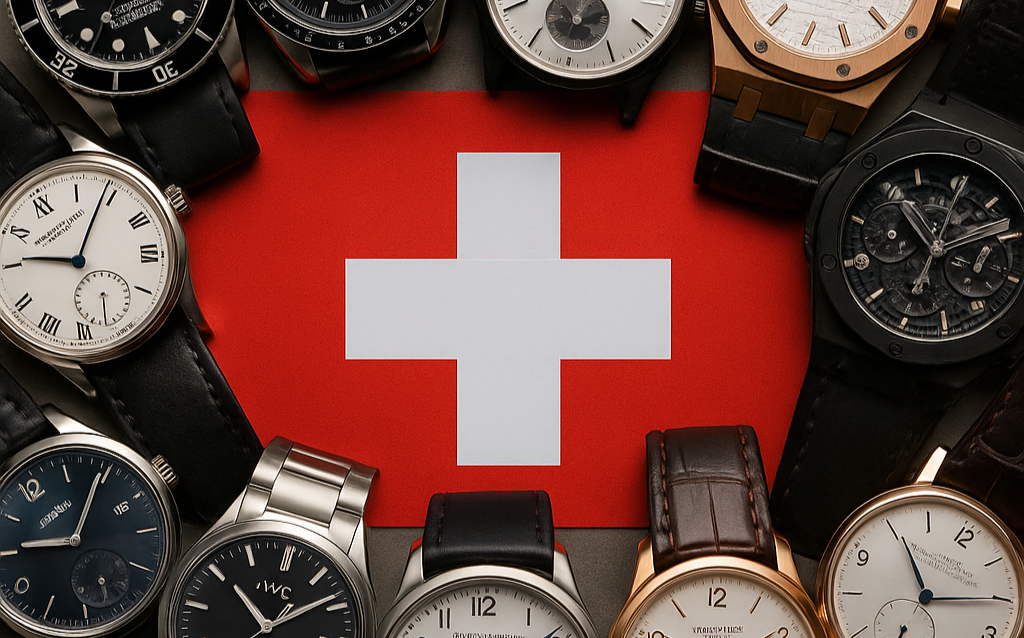
Following a slight decline in 2024, the Swiss watch industry is experiencing a mixed start to 2025. Swiss watch exports have shown moderate growth in the opening months of the year. By the end of April, the year-to-date total reached 8.66 billion francs, up approximately 4% compared to the same period in 2024. However, this rebound is highly uneven across different geographical markets. Performance was largely driven by the United States, now the world's leading market: from January to April, exports to the US surged by +42% year-on-year. In April 2025, an exceptional monthly increase of +18.2% was recorded, bringing monthly exports to CHF 2.5 billion. This surge is misleading: it is largely explained by a rush among American retailers to import Swiss watches before the introduction of new 31% tariffs in the United States. Without this anticipatory stockpiling across the Atlantic, the Federation of the Swiss Watch Industry (FH) indicates that exports would have fallen by 6.4% in April. The American contribution thus masks more sluggish underlying demand in other markets.
Indeed, China and Hong Kong, historically key markets, remain in sharp decline in 2025. Over the first four months, exports to China fell by -24.6% (and even -38% compared to 2019), while Hong Kong dropped by -14%. This weakness follows an already difficult 2024: China experienced a -25.8% plunge over the course of 2024, an even more pronounced drop than during the pandemic. Conversely, several markets are showing positive momentum in early 2025: Japan (+1.2%; +8% vs 2019) is now the third-largest market behind the US and China, supported by tourist spending. Notable increases are also being observed in emerging luxury markets: India grew by +10.5%, confirming its rapid rise in the luxury segment (+25% in 2024). Overall, the Americas (driven by the US) was the most dynamic region in 2024 (+5%) and early 2025, while Asia remains the weak link (primarily due to China). Europe remains stable, holding at the high levels of 2023, with moderate variations (UK -1.6%, France +2.5% in 2024).
In terms of price segments, the underlying trend is towards market premiumisation. In 2024, the export value of watches priced above CHF 3,000 rose slightly (+1%), while the segment below CHF 3,000 fell by -15.6%. This polarisation continues in 2025: the number of watches exported is at an all-time low (just 15.3 million units in 2024, down 9.4% year-on-year). Volumes continue to decline in favour of more expensive pieces. Steel timepieces, highly popular in recent years, saw their export value decline (-9.8% in 2024), while precious metal watches grew in value (+2.2%), mainly due to price increases, as their volumes also declined. In short, fewer watches are leaving Switzerland, but their average price is rising, reflecting a customer base focused on the high end.

Against this challenging backdrop, the big names in Swiss watchmaking are experiencing varying fortunes. On one hand, long-established, flagship independent brands (Rolex, Patek Philippe, Audemars Piguet, Richard Mille, etc.) have generally held up well, or even continued to grow. According to the latest Morgan Stanley/LuxeConsult report, the watchmaking “Big Four” (Rolex, Patek, AP, and Richard Mille) all experienced growth in 2024 despite the global slowdown. Rolex, in particular, consolidated its reign: the brand with the crown reportedly achieved CHF 10.5 billion in revenue in 2024, strengthening its position as number one. This corresponds to approximately a 32% market share on its own (including Tudor). This performance from Rolex is all the more remarkable given that it was achieved with 5% fewer units sold, proof of an increase in average price. Patek Philippe and Audemars Piguet, ultra-high-end family-owned brands, also continued to sell out their entire limited production, remaining highly profitable and desirable. Richard Mille, positioned in the sports hyper-luxury segment, maintained its high sales and aura of exclusivity.
Conversely, large publicly traded groups navigated 2024 with greater difficulty. The Swatch Group (Omega, Longines, Tissot, etc.), which is heavily exposed to the mid-range segment and China, saw its sales drop by approximately 12% over the course of 2024. Its sales reached CHF 6.7 billion, and its operating profit collapsed by 75%. The primary cause was the fall in demand in China and Asia, which led to an approximate 30% decline in the group's sales in that region. Swatch Group historically generates more than a quarter of its revenue in China and Hong Kong; this share fell to 27% in 2024. Yet, it is precisely the entry and mid-range segments that suffered the most from the slowdown, penalising Swatch Group, which sells 81% of its watches below CHF 7,500. Its iconic volume brands, such as Tissot and Longines, saw their sales decline sharply, as evidenced by Longines, which sold 41% fewer units than in 2020. However, the group remains confident for 2025, banking on a rebound outside of China, especially since certain markets performed well in late 2024 (the United States, Japan, and the Middle East), with successes for Omega and Tissot in the US.
For its part, the Richemont group fared better thanks to its diversification into jewellery. In the final quarter of 2024, Richemont posted a +10% growth in sales, driven by jewellery sales from Cartier, Van Cleef & Arpels, and others. However, its watchmaking brands (Cartier, IWC, Jaeger-LeCoultre, etc.) faced “challenges” at the end of 2024, with demand in China weighing on their results (though Cartier continued to grow in volume). As for LVMH, its Watches & Jewelry division (TAG Heuer, Hublot, Zenith, Bulgari, etc.) recorded a slight organic decline of -3% in 2024 (€10.5 billion in sales). Here too, the final quarter showed a recovery (+3%), a sign that 2025 could see a turnaround driven by initiatives such as the new LVMH Watches division and partnerships (e.g., TAG Heuer in Formula 1). Overall, we are therefore seeing a polarisation: ultra-premium players and iconic pieces continue to find buyers, while brands positioned lower down or heavily dependent on China have suffered a marked decline.

To better visualise this divergence between major houses and small independents, the table below summarises some recent economic trends:
| Indicator | Established Major Brands (Rolex, Omega, Patek, etc.) | Emerging Independent Brands (H. Moser & Cie, MB&F, Kurono, etc.) |
|---|---|---|
| Market share (value) | Top 4 ≈ 50% of the total (Rolex ~32% on its own) | Minimal (a few %; e.g., MB&F ~0.1%). Ultra-luxury niche experiencing occasional growth. |
| 2024 Performance | Stable or slight increase for leaders (Rolex approx. +5%). Volume brands in decline (Swatch Group -12% revenue). | Volume growth limited by production (often < 2,000 pieces/year). Strong collector demand, but low global visibility. |
| Key Markets | Balanced global presence (US, Europe, Asia). US = 17% of total revenue in 2024; China historically major but declining. | Concentrated distribution (online sales, a few specialist retailers). International insider clientele (US, Europe, Asia) via the internet and trade shows. |
| 2025 Challenges | Supporting supply in the face of demand (waiting lists), managing price increases and China/US uncertainties. Competition from the secondary market. | Increasing production without compromising quality. Building awareness without a massive marketing budget. Limited access to traditional distribution networks. |
| Strengths & Opportunities | Heritage, strong iconography (legendary sports/luxury models). Marketing power and global retail network. | Creative agility, cutting-edge watchmaking innovations (bold designs, unique complications). Rarity valued by collectors (“hype” of limited editions). |
On the consumer and collector side, several underlying trends characterise the market in mid-2025. Luxury sports watches remain the undisputed stars of both the primary and secondary markets. Steel timepieces with a sporty design (divers, chronographs, and “sport-chic” models with integrated bracelets) maintain high demand. Icons like the Rolex Submariner, Patek Philippe Nautilus, or Audemars Piguet Royal Oak continue to sell well above their retail price, feeding waiting lists at retailers. This phenomenon, which has been present for several years, has eased slightly for less exclusive models, but desirability remains very strong for legendary references. Brands have understood this: after the frenzy for steel sports watches, 2024 and 2025 are seeing a return of gold or titanium variants and slightly more restrained sizes, offering something fresh to collectors weary of the same models.
At the same time, the enthusiasm for vintage and neo-vintage is growing stronger. On the secondary market, auctions of exceptional vintage watches regularly break records, proving their heritage appeal (for example, vintage Rolex Daytonas, certain period Patek Philippes, etc.). This dynamic is influencing current production: many recent launches rely on nostalgia and re-editions. Models inspired by the 1960s and 1970s, “vintage fumé” dials, or vintage dimensions (cases under 40 mm) appeal to a clientele looking for authenticity. Independent houses are also riding this wave: Kurono Tokyo, for example, offers modern timepieces with a Japanese vintage style that sell out in minutes during pre-orders, demonstrating a genuine appetite among enthusiasts for retro-tinged originality.
Finally, in the high-end segment, watchmaking complications are once again becoming a valued medium of expression. After a period where minimalism and time-only watches dominated among some new collectors, 2025 is seeing a resurgence of interest in elaborate complication watches. Quantities remain confidential, but the visibility of grand complications is high thanks to specialist media and social networks. Perpetual calendars, minute repeaters, and tourbillons from major manufactures are finding buyers among a wealthy clientele seeking technical prowess. Similarly, bold pieces from independent watchmakers, such as MB&F's three-dimensional machines or H. Moser & Cie's cylindrical tourbillons, attract the attention of connoisseurs. These creations, while expensive, benefit from an aura of exclusivity and the appeal of watchmaking innovation. The year 2025 is also seeing numerous collaborations and limited editions (often sold out instantly), testifying to a collector market that remains hungry for rarity.
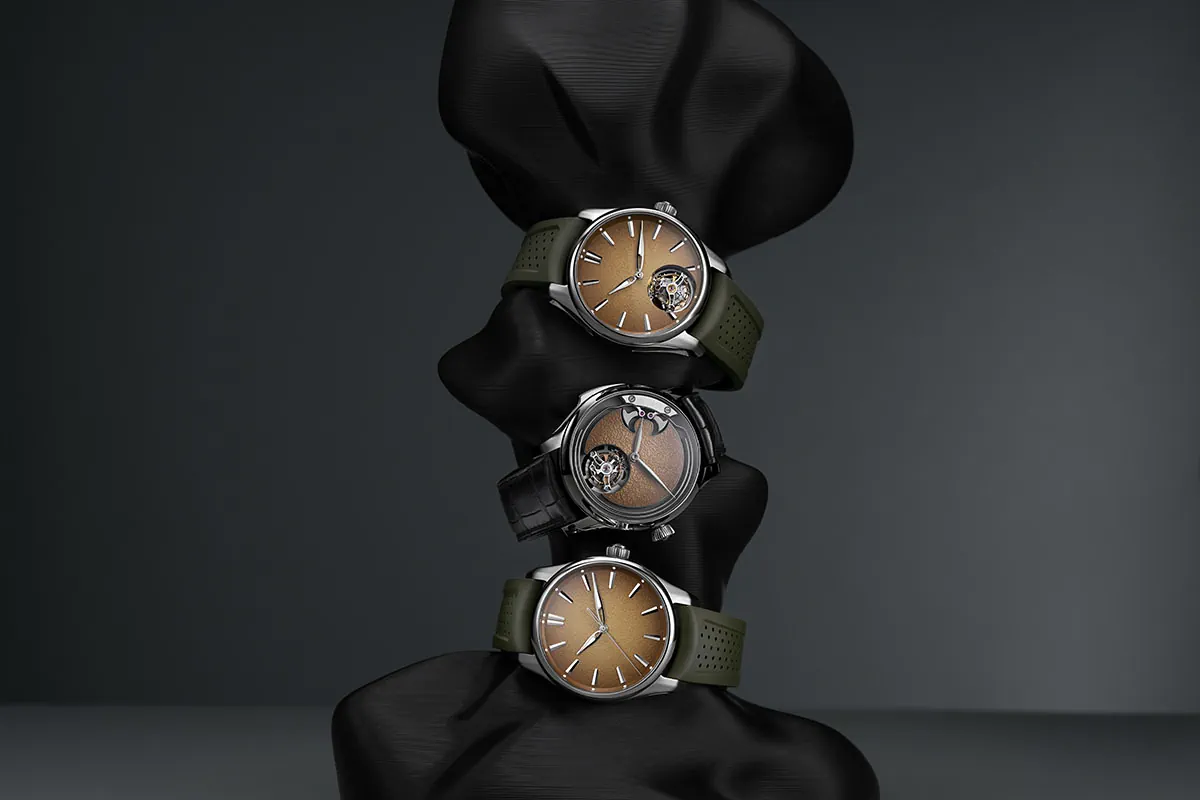
For independent and emerging brands, 2025 presents a picture of both structural challenges and unprecedented opportunities. On the challenge side, distribution remains a major issue. Lacking the global network of monobrand boutiques or retail partners enjoyed by major brands, many independents must turn to direct online sales or highly specialised retailers. This limits their visibility to the general public. Furthermore, in key markets like the United States or China, barriers to entry are high: in the US, the introduction of the 31% tariff in April 2025 adds extra pressure. Major brands, thanks to their brand equity, can pass on the price increase or negotiate with distributors, but smaller players fear an erosion of their customer base in the face of such forced inflation. Some young brands have had to announce to their American clients that they had “no other choice” but to increase prices by 31%, risking a loss of competitiveness compared to established giants.
Production is the other inherent limitation for independents. Most of these houses produce from a few dozen to a few hundred pieces a year, rarely more than a few thousand. Even when demand is strong, it is difficult for them to rapidly scale up volumes without compromising on quality, due to a lack of skilled labour and industrial investment. For example, certain references from MB&F or De Bethune require artisanal craftsmanship that cannot be easily replicated. Order books for these brands can stretch out for years, potentially frustrating impatient clients, a high-class problem that nevertheless demonstrates the appeal of their creations. Visibility is a related challenge: without the colossal marketing budgets of the major groups, independents rely on word-of-mouth, specialist media coverage, and the passion of online communities to build awareness. Events like Only Watch (charity auctions) or the GPHG (Grand Prix d’Horlogerie de Genève) offer valuable showcases for those who shine there, but these remain occasional.

Despite these pitfalls, 2025 presents notable opportunities and breakthroughs for independents. On one hand, the audience of savvy enthusiasts has never been more connected and informed, thanks to social networks, forums, and dedicated video platforms. A small brand offering a watch with a strong concept can see its launch go viral in the global watch community within hours. The example of Kurono Tokyo, whose every new limited edition sparks immediate international excitement, illustrates this potential. On the other hand, certain investors and partners are beginning to take a close interest in these niche players. According to an analysis by Business of Fashion, rarity, innovation, and the support of savvy investors have allowed young brands like Vanguart or the new house of Biver to launch in the ultra-luxury watch segment at $200,000. This combination of hyper-creativity and an agile business model paves the way for the creation of successful new independents. Finally, the major houses themselves recognise the value of independence: some collaborate with artisans (e.g., independent dial makers) or recruit talent trained by independents. This creative ferment contributes to enriching what the watch industry has to offer.
In summary, at mid-2025, the Swiss watch industry presents a mixed economic picture. Major historic manufactures dominate business volume more than ever, capitalising on their aura and the demand for their flagship models, but they must contend with an uncertain global market (a slowing China, tariff pressure in the US). Independent brands, meanwhile, continue on their unique path: despite distribution and scale obstacles, they benefit from a genuine enthusiasm among collectors for authenticity, creativity, and rarity. The second half of 2025 promises to be decisive in seeing whether the expected recovery materialises and whether this fragile balance between giants and artisans can endure in an increasingly competitive and demanding environment. Watch enthusiasts, in any case, will closely follow the evolution of this unequal but stimulating duel between the power of the major houses and the audacity of the independents.

Osterman Watch
Strategic expertise for discerning watch brands
We support watchmaking houses in their digital development, visibility, and international reach
Content strategy, brand positioning, editorial consulting, high-end format production, targeted communication
An independent, specialised team at the service of your uniqueness
We understand the codes of watchmaking, collector expectations, and market dynamics