A Tribute to Jacqueline Dimier, the Woman Who Brought the Royal Oak to Life
Jacqueline Dimier, who died on 7 November 2026, led design at Audemars Piguet from 1975 to 1999. The first women’s Royal Oak, the Bambou, mentoring Emmanuel Gueit: a look back at what she gave to watchmaking.
Jacqueline Dimier passed away on 7 November 2026, a few weeks short of her 88th birthday. Her name never reached the fame of Gérald Genta’s, yet for almost a quarter of a century she gave Audemars Piguet much of its face. As head of product design at the Le Brassus manufacture from 1975 to 1999, she drew hundreds of watches, created the first Royal Oak for women and trained a generation of designers. This is a look back at what she brought to watchmaking, and at what remains of it today.
Nothing really destined her for watches. Trained as a graphic designer and schooled in the decorative arts, Jacqueline Dimier entered product design through jewellery, a job she would later describe as not challenging enough. As a designer from Geneva, she drifted naturally towards watchmaking, working for Patek Philippe and Vacheron Constantin before joining Rolex in 1968. It was there, in 1972, that she watched Genta’s Royal Oak make its debut in Basel. She later recalled that the whole industry, whatever the brand, could talk about nothing else. She did not yet know it would soon become her responsibility.
On 6 January 1975 she joined Audemars Piguet as a stylist and quickly took charge of design. Her first assignment was daunting: a Royal Oak for women. The project already existed, as the manufacture’s archives show, but its proportions did not work and everything had to be reconsidered. The brief also required an automatic calibre of 6¾ lignes, roughly 15.4 mm across and 4.25 mm thick, which forced her to draw a fairly deep case for a ladies’ watch. Rather than simply shrinking Genta’s design, she rebuilt its entire architecture.

The result, reference 8638, was launched in 1976. The diameter came down to 29 mm, but the octagonal bezel and its eight visible screws stayed, because they are what make a Royal Oak. To lighten the dial, she had an idea that looked minor and became a signature: placing the AP monogram in white gold at 12 o’clock for the first time. Audemars Piguet still describes this watch as just as revolutionary in its own way as the original. In 1976, offering a woman an angular, unapologetic steel sports watch went against everything the industry believed about its female clientele. The following year the 8638 was released in yellow gold, white gold and two tone steel and gold. The Royal Oak stopped being a single model and became a collection.
Yet reducing Jacqueline Dimier to the Royal Oak would be unfair. For twenty-four years she designed or oversaw most of the house’s creations, for men and women alike. She worked on the extra thin automatic perpetual calendar unveiled in 1978, one of the pieces that revived complicated high watchmaking in the middle of the quartz crisis. In the 1980s she designed, among others, the Bambou, a yellow gold watch that is highly sought after by collectors today. Her taste for blurring the lines between watch, jewel and art object runs through the whole catalogue of the period, with a boldness in colours and materials that still surprises.
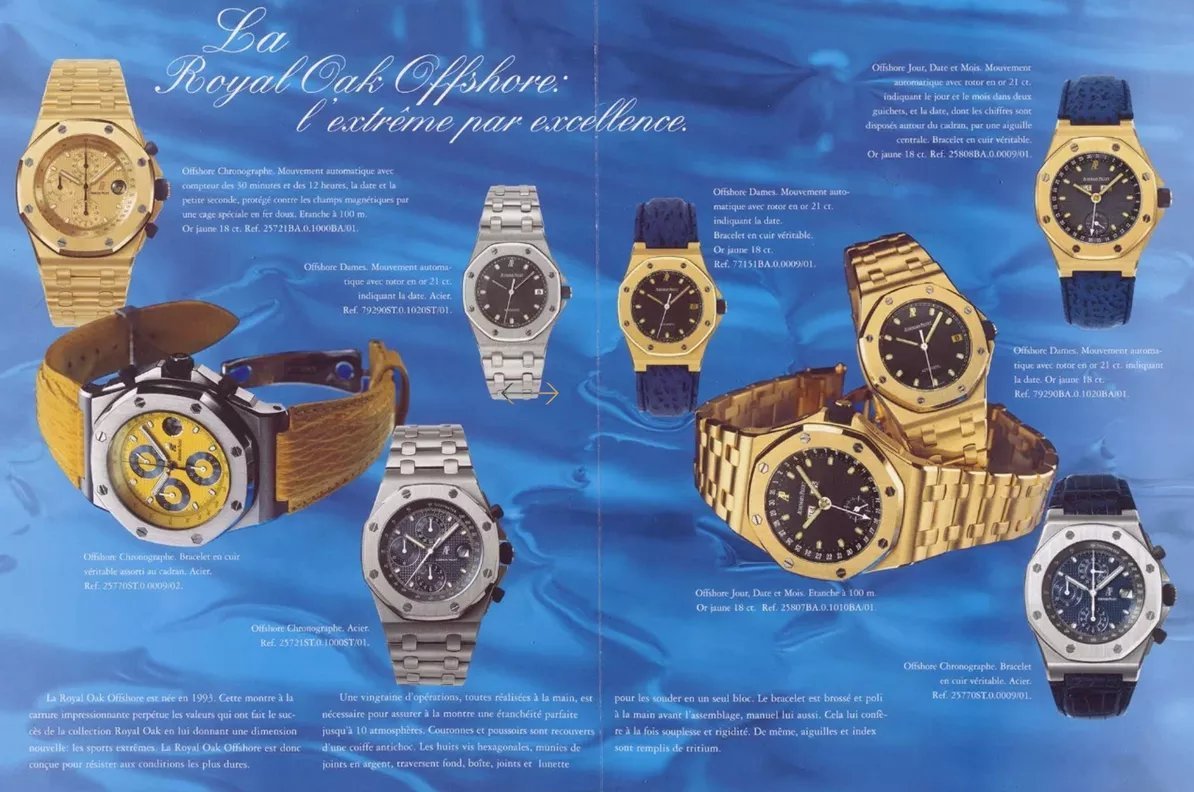
Her other legacy, less visible, lies in the people she trained. In 1987 a young designer named Emmanuel Gueit joined her department. He would go on to create the Royal Oak Offshore, unveiled in 1993 and fiercely criticised by Genta himself. Dimier saw the massive new watch less as a Royal Oak than as a close relative, which was probably the best way to let it exist. Speaking to Luxury Tribune the day after her death, Gueit counted her among his three mentors and summed up his debt in a few words: she taught him everything. He added that if Genta was the father of the Royal Oak, she was the one who brought it to life.
After she left in 1999, the manufacture kept coming back to her. In 2016, for the 40th anniversary of the women’s Royal Oak, Audemars Piguet asked Florentine jeweller Carolina Bucci to create the Royal Oak Frosted Gold, explicitly presented as a tribute to the 1976 design, and Jacqueline Dimier attended the demonstrations of the Florentine hammering technique in the workshops. For the Royal Oak’s 50th anniversary in 2022, she joked that she envied the watch, which unlike her did not look its age. She was wearing a model slightly smaller than her own 1976 version at the time.
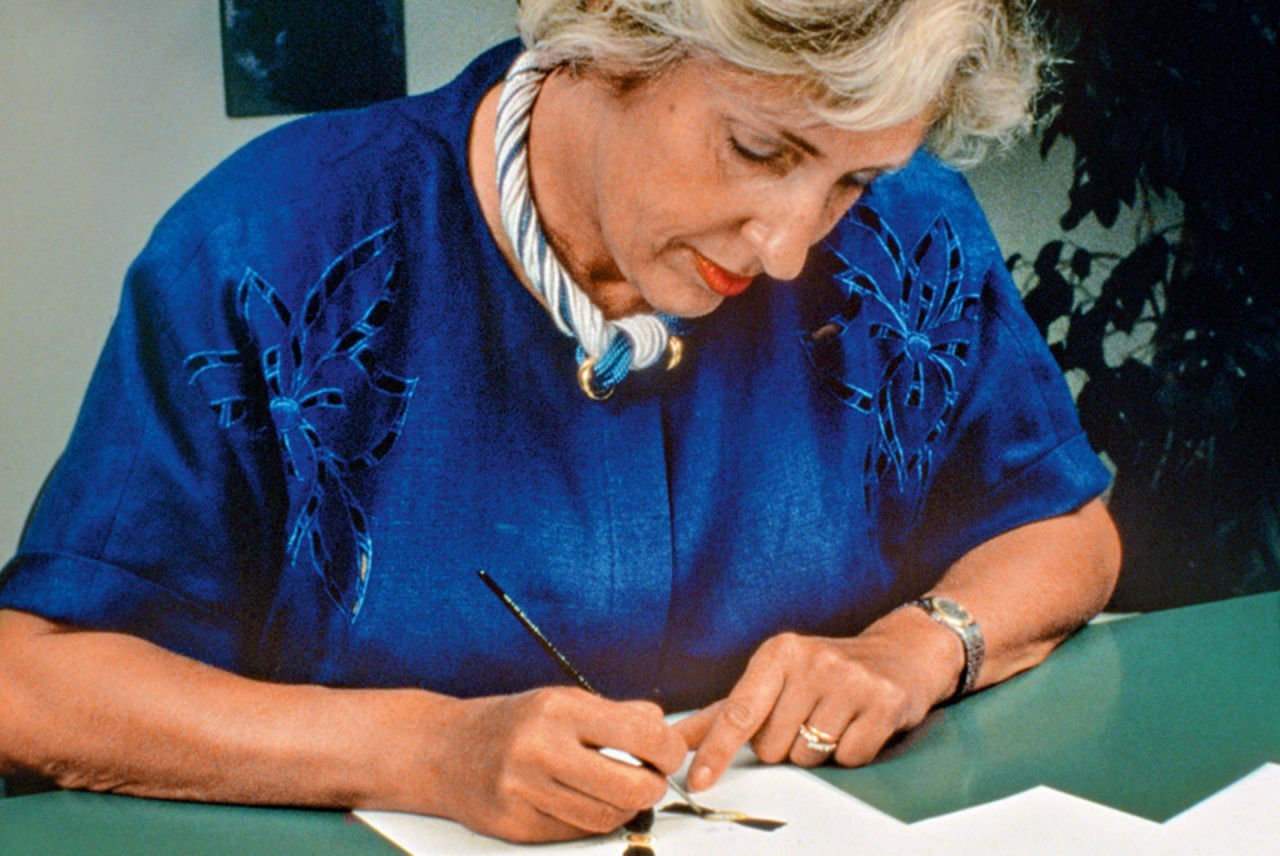
Her influence can also be read in the market. The small Royal Oaks that make up a large part of today’s collection all descend, one way or another, from the 8638, and the Bambou, long overshadowed by the great men’s references, is now highly sought after. It is surely no coincidence that the manufacture has just launched its Royal Oak Joaillerie collection, fifty years after the first Royal Oak for women.
In an industry where design was handed down from father to son and where the names remembered were almost all male, Jacqueline Dimier imposed a simple and radical idea: a woman’s watch can be sporty, architectural and made of steel without losing any of its elegance. Fifty years later that idea has become self evident, which may be the finest tribute one can pay her. To follow how Royal Oak prices and the other Audemars Piguet icons are moving, see their charts in the Osterman Watch index.